
RLHF preference signal for a text-to-image reward model
Problem
To improve its text-to-image models, the company needed to rapidly produce high-quality human preference signal. Creating it in-house would divert resources from core product work, and generative AI signal required dedicated tooling and expertise to meet narrow timeframes set by the company's pace of development.
Solution
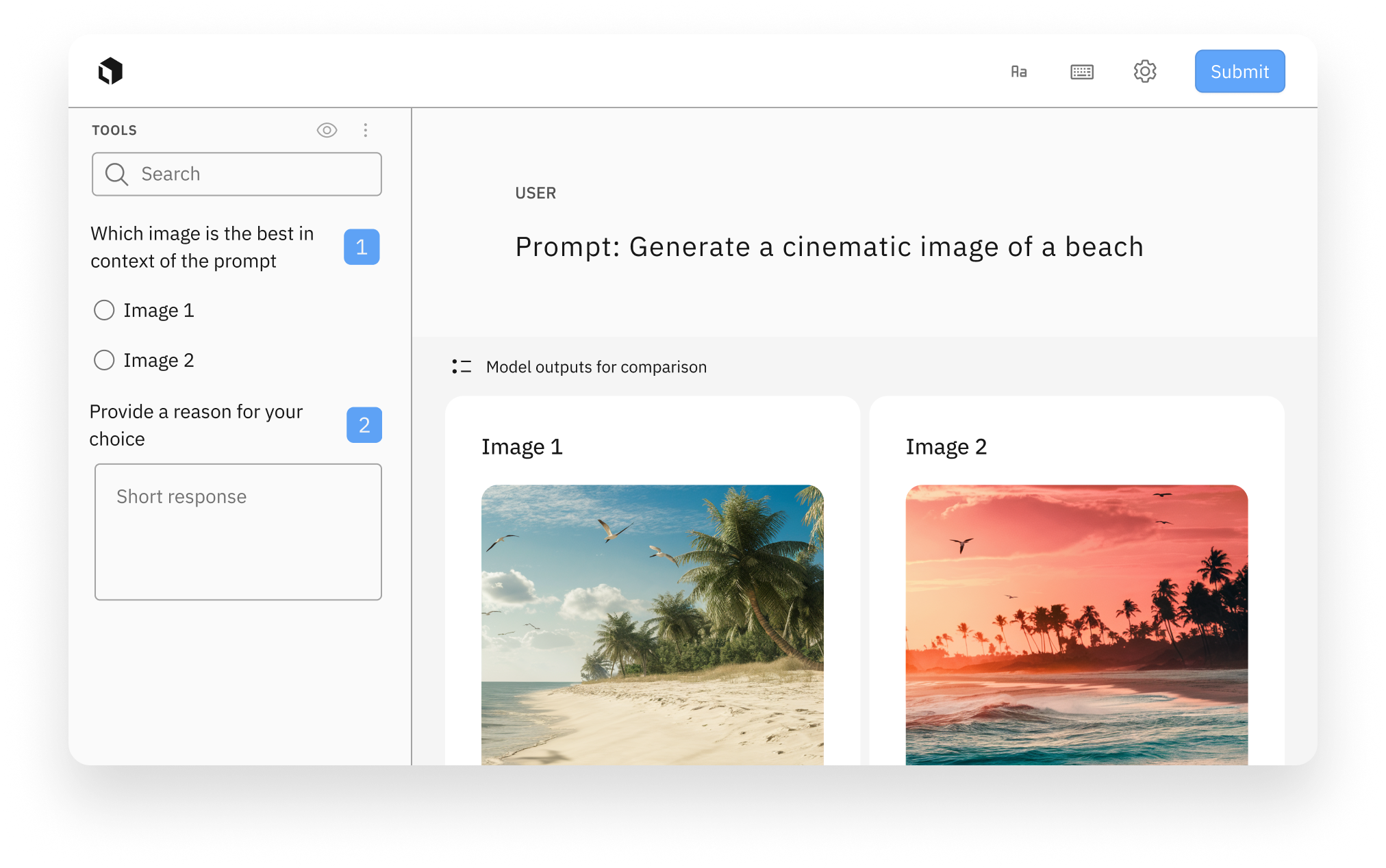
Labelbox produced the signal. The platform improved the company's text-to-image data quality and met its deadlines, and its LLM human preference editor let the company run reinforcement learning from human feedback (RLHF) — creating preference data to train a reward model from multiple outputs of a single model.
Result
Labelbox's platform improved the speed of producing high-quality human preference signal by 2x and compressed product development from months to weeks.

A text-to-image app needed human preference signal to train its reward model. Labelbox's platform produced the RLHF signal and ran the evaluation loop that pointed training where it mattered.
The challenge
A leading app for generative media — images, posters, logos — wanted to improve its text-to-image models. Like DALL-E 3 or Midjourney, it turns a text prompt into images tuned to the user's preference. Improving those models takes high-quality human preference signal. Producing it in-house would pull focus from core product work, and it demanded dedicated tooling and expertise to hit narrow timeframes set by the pace of development.
The approach
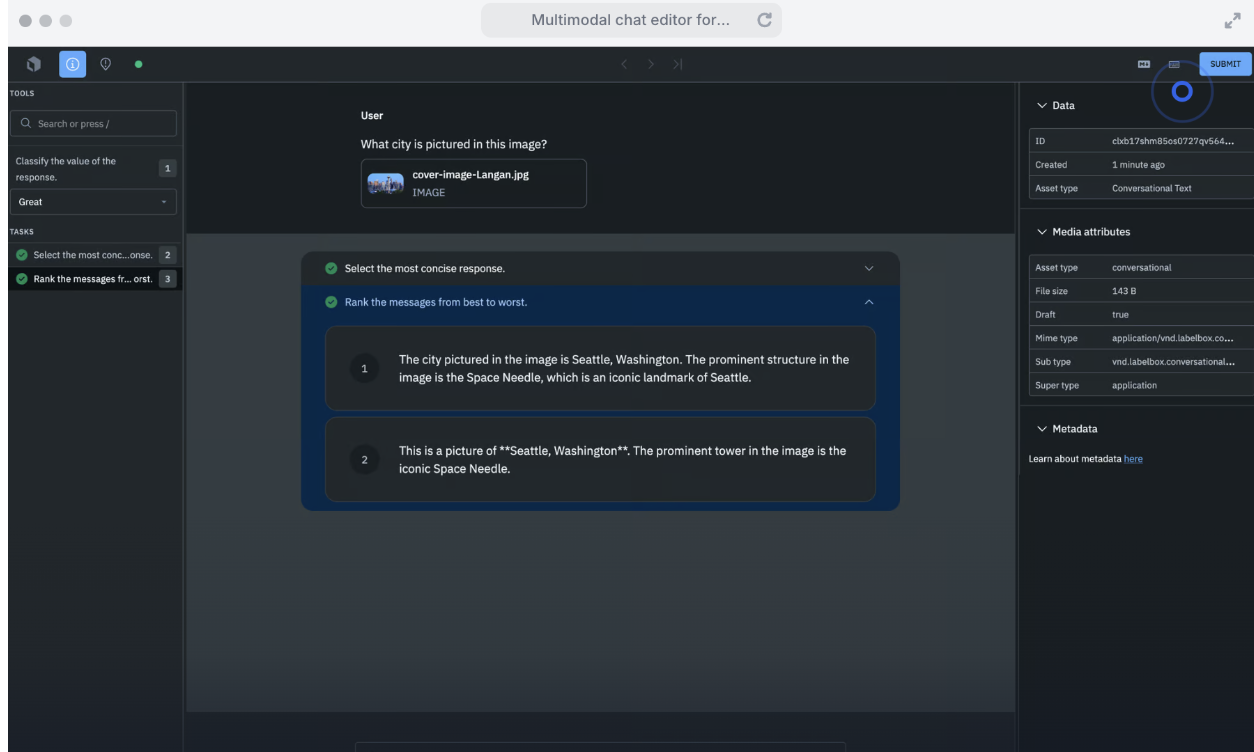
Labelbox produced the signal. Its LLM human preference editor let the company run reinforcement learning from human feedback (RLHF) — creating preference data to train a reward model from multiple outputs of a single model. Labelbox's multimodal chat solution increased throughput for the targeted signal that fixed where models underperformed, by comparing text-to-image outputs against other leading models. Together this became a data engine: compare multiple models in live, multi-turn conversations, rank outputs for data-driven evaluation, and benchmark weekly against competitors and the company's own in-development models. The company then targeted signal creation at the highest-impact gaps and verified results through another evaluation run.
The outcome
The company improved the speed of producing high-quality human preference signal by over 50% and compressed product development from months to weeks — with Labelbox producing the signal its text-to-image development needed instead of internal teams. Next, it's expanding image-domain expert signal to keep pace with growing consumer adoption.
Where this goes
Reward models are trained on human preference. This is the RLHF loop that turns raw generation into a model people actually prefer.